
In this article, we invited Daniel Powell, Creative Director of SPACElogic to share some key insights from his decades of experience working on exhibitions and visitor experiences.

Interviewer: Hi Daniel, could you tell us more about yourself?
Daniel Powell: Sure! I’ve worked in Singapore since 2004 and started mainly designing exhibition booths for various trade shows, both locally and regionally. Along the way, I got involved in gallery and showroom design for corporate clients who wanted to showcase their products and technologies in a more permanent setting. Following a short stint in corporate interiors, I worked almost exclusively on visitor galleries and large exhibitions in some of the local museums. I then took on a role as a Creative Director, which involved leading a large studio and spearheading major projects both in Singapore and abroad. It was during this period that I also had the opportunity to work with the National Heritage Board to redesign two important permanent museums here in Singapore. Fast-forward a little more and that brings my path to SPACElogic Group, where I look after the design studio and oversee the creative output of the various teams.
Interviewer: Given your years of experience in this field, could you share with us what is the most critical element that drives a lasting impression on visitors?
Daniel Powell: At the heart of crafting an exhibition, gallery or any other experience, it is about telling a story that resonates with the visitor. Regardless of the theme or content, a compelling story that appeals to people’s emotions is often what leaves the most lasting impression. As such, it is essential to craft an experience that visitors can emotionally connect with, for them to remember long after they leave.
Interviewer: You mentioned the importance of storytelling. Can you elaborate on how this can be effectively done in an event and exhibition setting?
Daniel Powell: The most memorable exhibitions share stories that forge emotional connections between visitors and the subject matter. Look for stories of human struggle, courage, passion, or creativity. Use text, images, video and audio to share these stories engagingly. For instance, Our Cultural Medallion Story is one of our past projects that celebrates individuals who contributed significantly to enriching the arts and cultural landscape of Singapore.
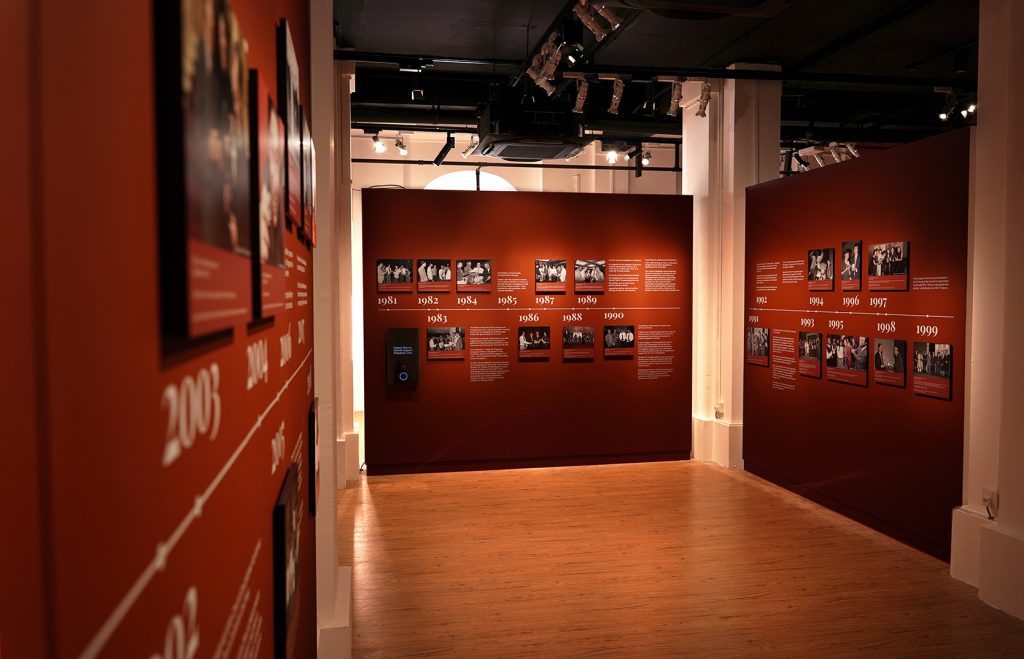
Embracing the ‘Phygital’ (physical plus digital) experience, this gallery seamlessly blends both physical and digital elements to create a truly interactive experience. From physical showcases on the Feature wall, The Cultural Medallion coin, Lapel pin & Certificate, and Milestone timeline, to using Near-Field Communication (NFC) tokens, Digital Interactive Stations, and Digital Feature Videos—this gallery houses both elements that invite visitors to learn about how the Cultural Medallion began, the inspirations driving the recipients and delves into each of their creative journeys.
Interviewer: Interactive activities seem to be a recurring theme. How do they enhance the visitor experience? And how can one build an immersive and engaging exhibition theme from the visitor’s perspective?
Daniel Powell: Before diving into design and build, it is crucial to think from the visitor's point of view, or who we commonly refer to as the ‘end user’. We consider what emotions and thoughts we wish to evoke, what message and values we wish to impart, then we begin to think about which type of visitor engagement is the most suitable.
In a museum and gallery design, Interactive activities are vital as they allow visitors to actively explore the exhibition theme(s), and spark curiosity and excitement—especially for younger audiences. Tailoring key messaging can be done very effectively through interactive stations. There are various elements that can contribute to an immersive environment and these include interactive displays or games, large format multimedia, lighting and audio/soundscapes to bring the theme to life.
For example, Little Ant Kingdom, is a thematic playscape where the prowess of our creative technologist team shone. To overcome the challenge of enriching the space with scientific facts about ants without it being overwhelming, we created a space that captivates while imparting knowledge in a bite-sized way—striking a careful balance between detail and accessibility for young minds. The incorporation of tactile elements, such as custom-built tunnels that mimic ant nests, allows children to explore and experience the ant’s environment firsthand.
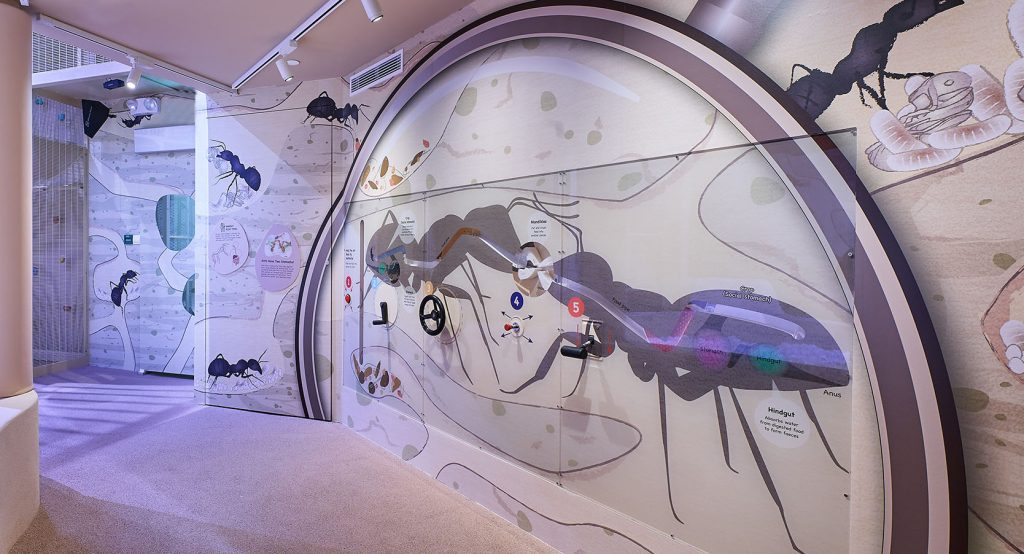
The utilisation of mechanical game interactives also helps teach scientific concepts such as food transference and the ants’ defence mechanism—bringing the ant kingdom to life in vivid detail. The result is a mesmerising underground habitat that transports visitors into the realm of ants.
Interviewer: Nowadays we often see words like “immersion” or “immersive experience” being used to describe exhibitions. Could you share how interactive and experiential exhibits are used to create a memorable experience?
Daniel Powell: To craft an unforgettable experience, exhibits should engage audiences through interactive and multisensory elements. With hands-on interaction, it enhances our understanding of the subject matter and transports the visitor ‘into’ the world we want them to experience.
Beyond sight, the inclusion of ambient sounds or scents (related to the theme) can also drive remembrance of the experience.
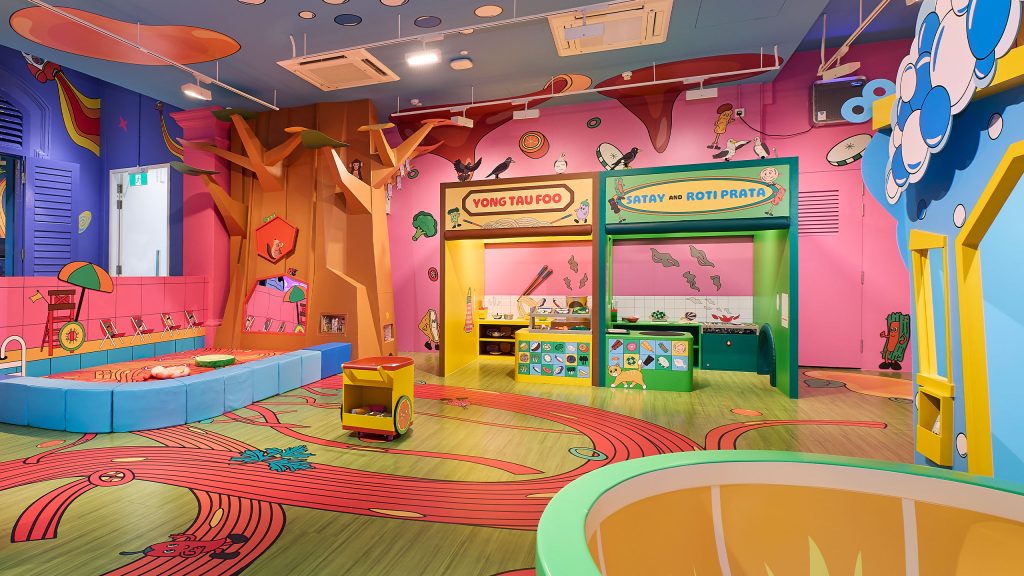
Into the Hawkerverse at the Children’s Museum Singapore is a perfect example of this. Aimed at being both a playscape and a dynamic educational space that vividly brings Singapore’s unique hawker culture to life for children, it cleverly incorporates Radio-Frequency Identification (RFID) technology in the hyper-realistic hawker stall play stations, allowing children to step into the shoes of hawkers and experience running their stalls. Through this, it creates a thoroughly immersive environment that blends fun, interactivity, and education for the young ones and their families.
Interviewer: Technology is often touted as the key to enhancing engagement for events, exhibitions and galleries. What role does it play and how can it be effectively integrated into an exhibition?
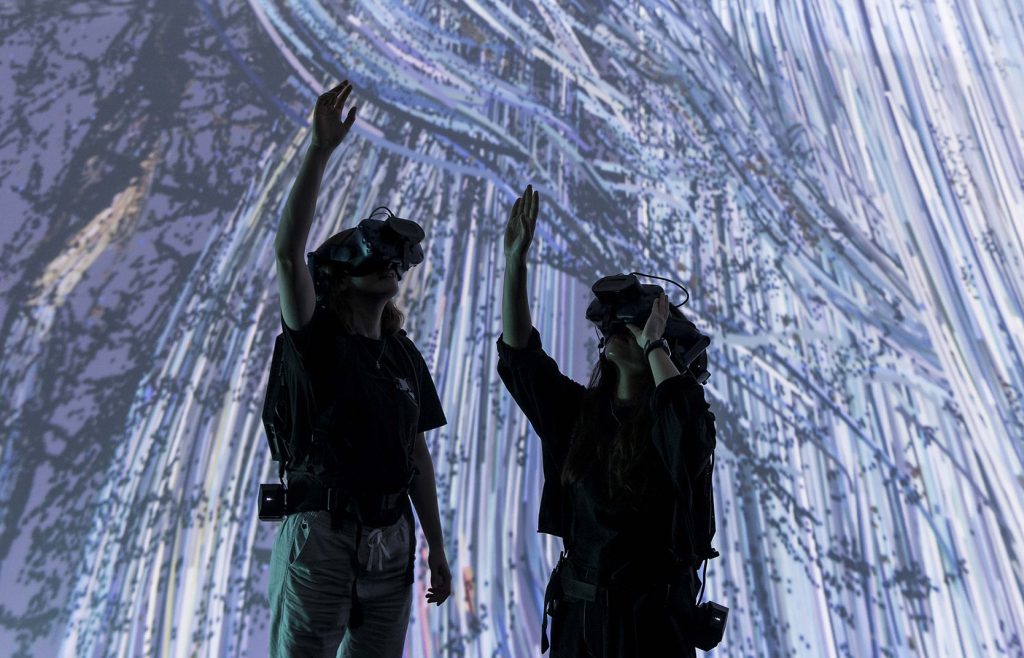
Daniel Powell: Interactive kiosks, augmented reality (AR), and virtual reality (VR) can transform static displays into interactive experiences. For example, AR applications can provide supplementary content when visitors point their devices at an artefact. VR can digitally reconstruct inaccessible locations, giving visitors a sense of presence in another time and place. When done right, these cutting-edge technologies can help create a modern and dynamic exhibition. One instance would be our VR gallery project at the ArtScience Museum, where state-of-the-art VR headsets and controllers bring visitors into a world of possibilities on a cinematic scale.
Interviewer: Besides the pointers you have shared, are there other important but frequently overlooked aspects of an exhibition that can enhance visitors' experience? Can you share some strategies for achieving this?
Daniel Powell: Seamless visitor navigation is crucial for a smooth experience. While this is commonly understood as things like ensuring clear directional signage and environmental graphics within the space, at SPACElogic, we go beyond just that. We focus on thoughtful spatial planning to maintain the curator’s vision and ensure content coherence.
Every element should be strategically placed within the visitor journey, with suitable visual cues to minimise potential confusion. Each site is unique in terms of its layout—traditional rectangular venues have evolved to take on various footprints, from cylindrical to organic and irregular shapes. While this uniqueness comes with its own set of constraints, it also presents opportunities to try new things and push boundaries.
Hence, one important step is to carefully study the space and overall architecture to ensure that within each section of the experience, the artefacts and any special builts can be placed optimally. A good exhibition layout always maximises the potential of an architectural space.
With Goddess at the ArtScience Museum, given that the upper galleries form a torus shape along with structural walls that would have hindered the flow of storytelling, we had to creatively overcome these challenges by using solutions like fabric partitions, which allowed us to continue the visual narrative whilst circumventing the physical limitations.
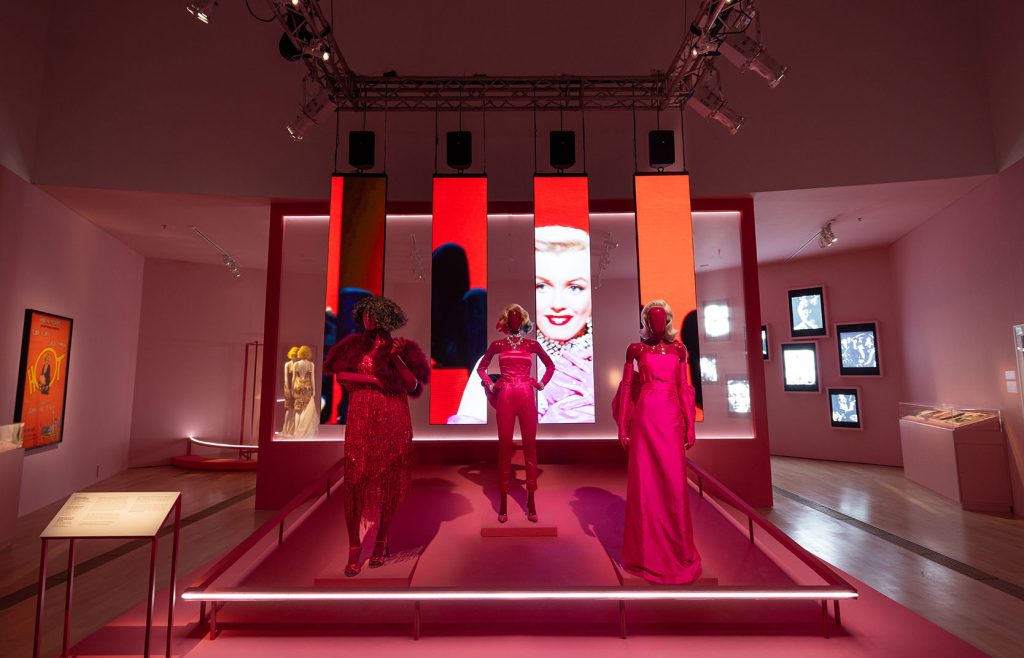
Ultimately, our goal was to create an immersive and coherent experience that guides visitors effortlessly through the exhibition, keeping them engaged and enhancing their overall experience.
Interviewer: Finally, what is one parting message you would like to leave with the readers?
Daniel Powell: When it comes to crafting events, exhibitions, or thematic galleries, we should foremost consider the key message to impart to the end user. Nowadays, it is commonplace to see exhibitors leaning towards “bigger, better, flashier”, be it adopting the latest technology or maximising the scale of the exhibition. That said, there is a fine line to tread between a design being gimmicky and using design or technology to create an authentic expression. Only when tastefully done does it have a positive impact on driving the storytelling. Technology, in particular, should not be regarded as the be-all and end-all
when designing or experiencing an exhibition. If harnessed well, it can certainly add great value, but it all needs to start with a ‘story’!
Interviewer: Thank you, Daniel for sharing these valuable insights. Your expertise will surely help many create unforgettable exhibitions
Daniel Powell: It was my pleasure. Crafting memorable experiences is what we strive for at SPACElogic, and I am glad to share what we have learned.
